Overview
FlowEdge is a small stack with one job per layer. The point is worst-case latency on a robot period, not average throughput.
A general graph runtime would accept more architectures with less hand work. It would also reintroduce allocation, dispatch, and a working set that is hard to bound — exactly the variance a control loop cannot absorb. So the model is hand-assembled: convert tensors into known names, carve one arena, call kernels through one header. ADR 0005.
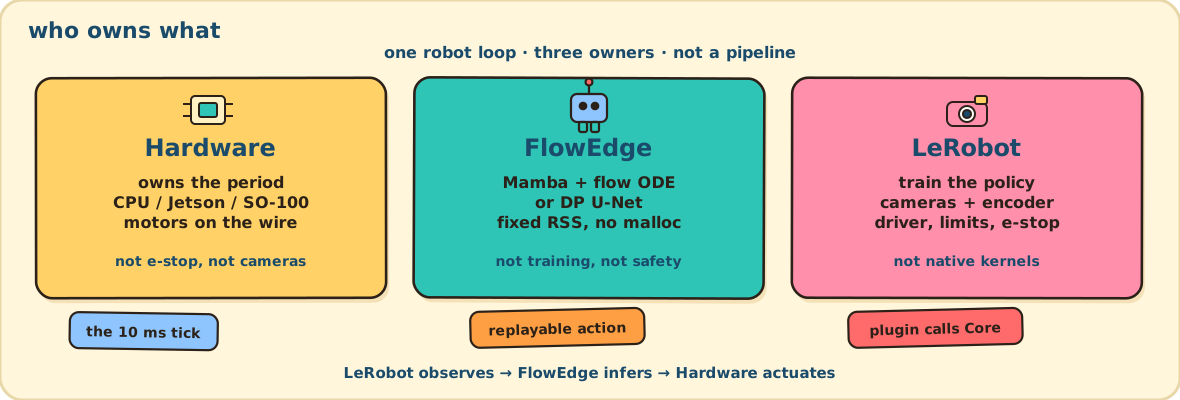
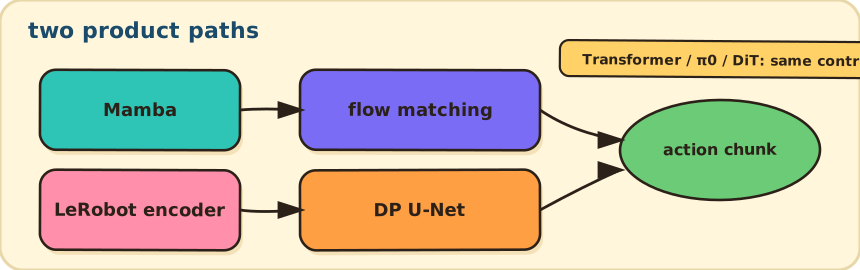
Two product heads share that stack:
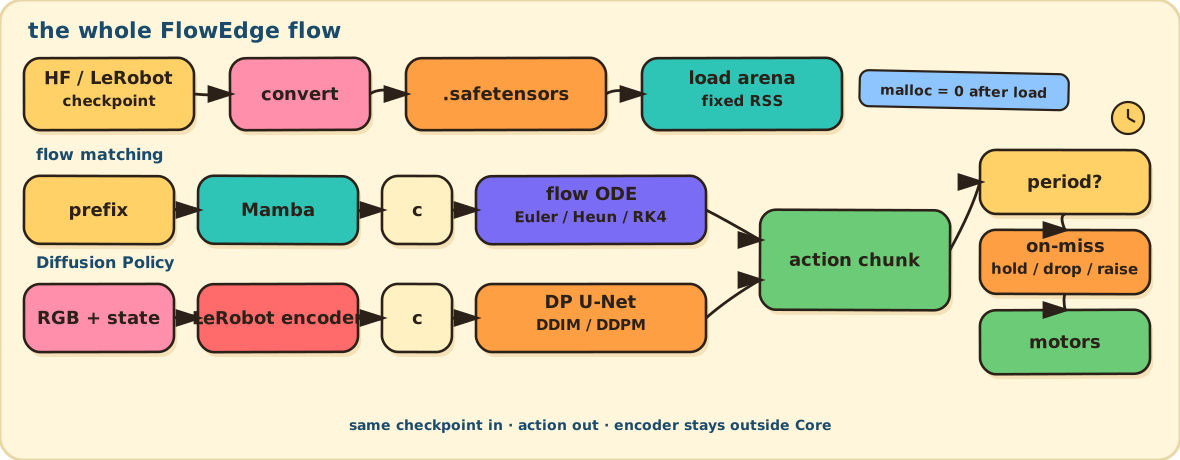
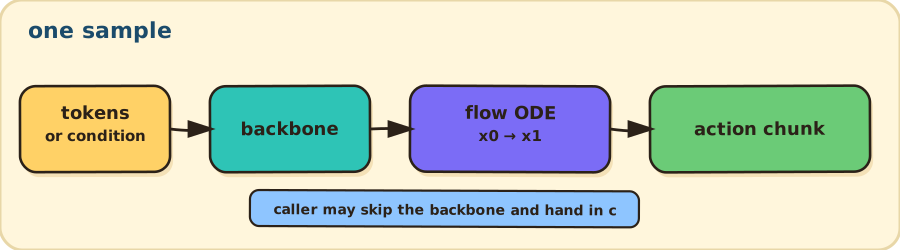
Flow matching — a short ODE (dx/dt = v(x,t \mid c)) from noise to action. Mamba (or a caller-supplied encoder) produces (c).
Diffusion Policy — DDIM on a Conv1D U-Net. LeRobot’s RGB encoder stays outside Core.
Transformer conversion and a cached SmolVLA expert are incubators, not those heads.
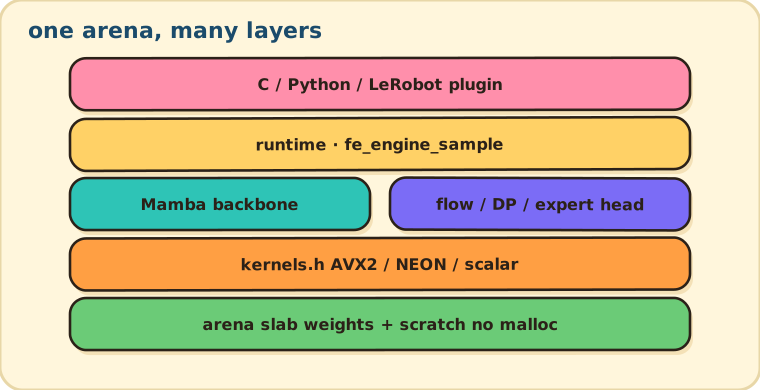
Arena. One bump slab. Load may allocate it; the hot path does not.
Loader. Zero-dep
.safetensorsmmap. F32 and BF16.Runtime.
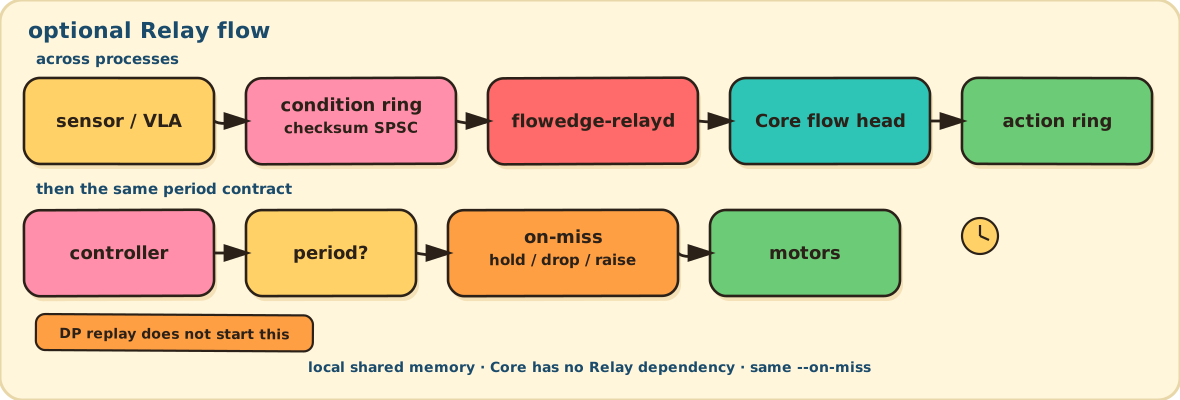
engine_runtimeowns persistent state, model assembly, SPMC pool. C ABI is a thin adapter.Kernels. One header. CPU today.
FLOWEDGE_BACKEND=cudakeeps Mamba, flow, and Diffusion Policy heads on device. Vulkan / Tenstorrent (Metal) stay planned.Backbone. Prefix → condition. Mamba today (constant-size state). Transformer is a CPU decoder fixture, not a policy.
Head. Condition + noise → action. Flow matching or Diffusion Policy. An external encoder can skip the backbone.
Split the ODE with flow_begin / flow_advance if the robot has to yield. Cooperative execution. Model code calls matmul and discretize_and_scan, never a device API. Footprint is computed at load.